
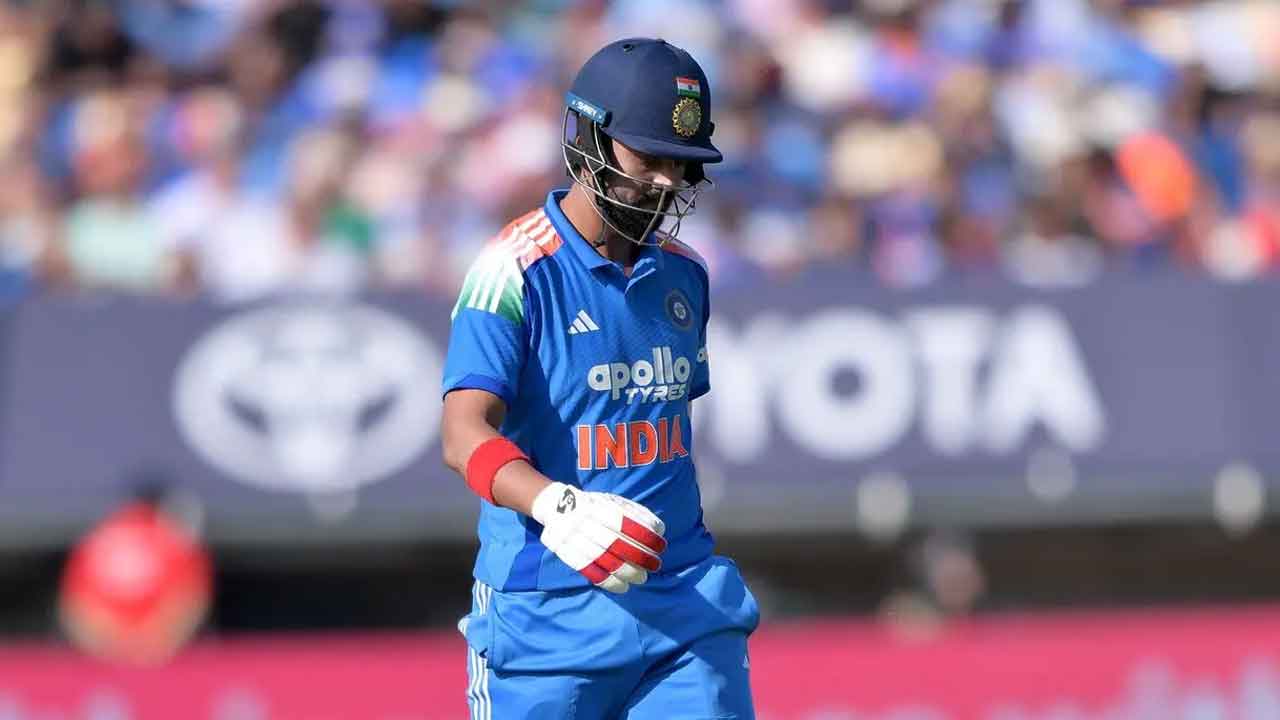
Former India captain Kris Srikkanth did not mince words when he criticised the team management’s decision to send KL Rahul at No. 6 during a crucial chase at Lord’s. For a batter with Rahul’s experience, technique and proven record, the move felt less like a tactical masterstroke and more like another example of India complicating a player’s role unnecessarily.
And that is where Srikkanth’s anger resonates with many fans. His point was simple: India have done this before. They have shuffled players, denied them clarity, judged them harshly after limited chances, and then moved on as if the player failed on his own.
The KL Rahul Question: Why No. 6?
KL Rahul is not a bits-and-pieces batter. He is not someone whose value lies in being pushed around endlessly to plug gaps. He has opened, batted in the middle order, kept wickets, handled pressure in ICC events, and played several rescue acts for India.
So when India needed stability in a tense chase at Lord’s, sending Rahul at No. 6 raised obvious questions. If a player of his class is not trusted to bat in a position where he can shape the innings, then what exactly is the plan?
Srikkanth’s criticism was not just about one batting position. It was about a pattern — a pattern where India’s team management appears to experiment with players until their confidence takes a hit.
The Samson Parallel
Sanju Samson’s career has often been cited as a classic case of inconsistent backing. He has been picked, dropped, recalled, benched, promoted, demoted and then scrutinised after sporadic opportunities.
For a player to succeed at international level, talent is not enough. He needs role clarity. He needs a run of games. He needs to know whether the management sees him as a top-order aggressor, a middle-order finisher, or merely a backup option.
Samson has rarely received that luxury. That is why Srikkanth’s comparison strikes a chord. The fear is that Rahul, despite being far more established, is now being subjected to similar uncertainty.
Sooryavanshi and the Fear of Mishandling Young Talent
Srikkanth also referred to the broader issue of how Indian cricket handles talent such as Sooryavanshi. Whether it is a young player or an experienced international, the concern remains the same: are players being given roles that suit their strengths, or are they being squeezed into whatever slot is vacant?
India has no shortage of talent. In fact, the problem is often the opposite — too many options and not enough clarity. But having depth is useful only if the team knows how to manage it. Otherwise, promising players become confused, senior players become insecure, and the team balance suffers.
India’s Recent Results Make the Debate Louder
Criticism always becomes sharper when results go wrong. India’s ODI series defeat and other recent setbacks have naturally intensified scrutiny of selection calls, batting orders and tactical decisions.
When a team wins, experiments are called brave. When a team loses, the same experiments are called reckless. But the real issue is not hindsight. The real issue is whether these decisions are part of a long-term plan or just reactive tinkering.
In Rahul’s case, the decision to bat him at No. 6 looked questionable because it did not appear to maximise his strengths. A player who can build an innings, rotate strike and absorb pressure should ideally be used where he has enough time to influence the game.
KL Rahul Deserves Clarity, Not Confusion
Rahul has already reinvented himself multiple times for India. He has accepted different roles without public drama. He has kept wickets when required. He has batted in positions that demanded sacrifice. But even the most adaptable player needs a defined responsibility.
If India see Rahul as a middle-order anchor, then back him there consistently. If they see him as a top-order option, give him that role. If they want him as a finisher, then prepare him for that specific job. What cannot continue is using him as a floating solution and then questioning his output.
The Bigger Problem: Too Much Experimentation, Too Little Patience
Modern cricket demands flexibility, but flexibility should not become instability. India’s management must understand the difference between tactical adaptability and unnecessary disruption.
Players are not machines. Confidence matters. Rhythm matters. Knowing when you will bat matters. Knowing what is expected of you matters.
That is why Srikkanth’s remark — “Now you are screwing up KL Rahul” — may sound harsh, but it reflects a deeper frustration among Indian cricket followers. The frustration is not simply about Rahul. It is about a system that sometimes appears to overthink obvious decisions.
Final Thoughts
KL Rahul is too valuable to be treated like an afterthought in the batting order. Sanju Samson’s stop-start journey has already shown what can happen when talent is not given consistent direction. If India are not careful, they risk creating similar uncertainty around players who should be central to their plans.
The message from Srikkanth is clear: stop complicating roles, stop experimenting without purpose, and stop damaging players’ confidence in the name of flexibility.
India do not need more confusion. They need clarity, conviction and accountability — especially when handling players of KL Rahul’s calibre.