
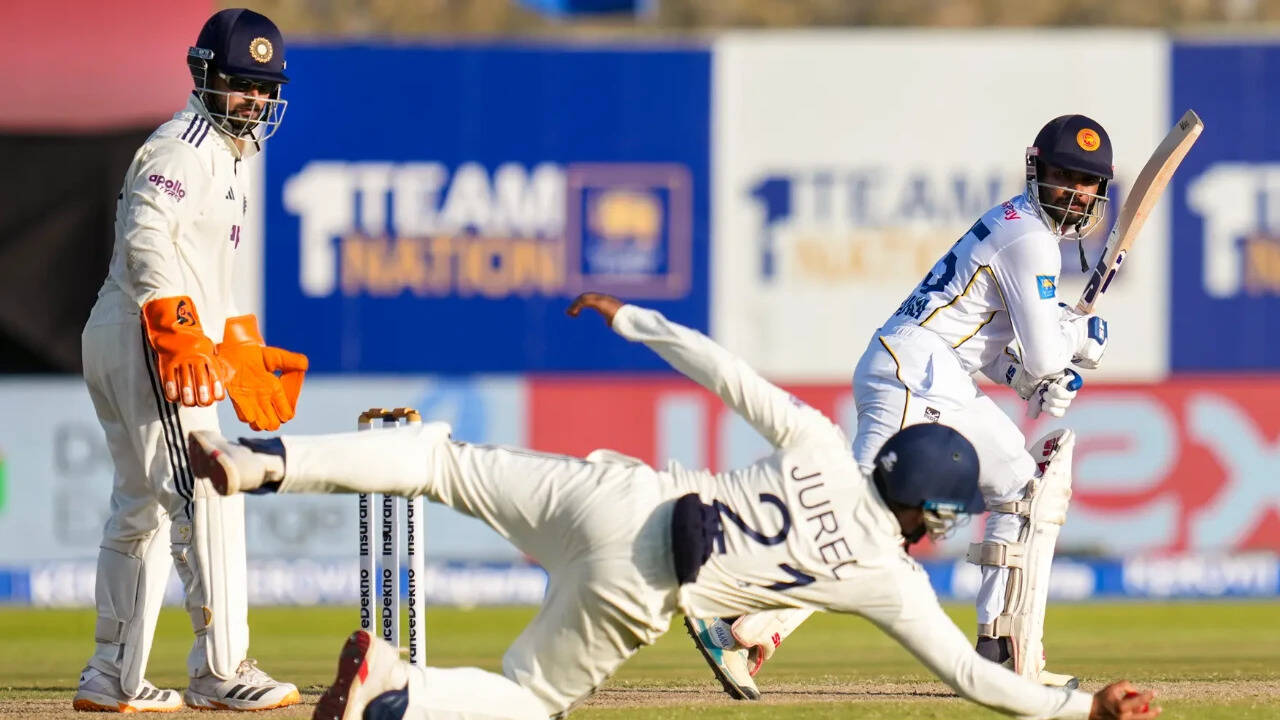
A Catch That Shook Galle: The Dhruv Jurel Incident That Sparked Debate
The final day of the Galle Test between India and Sri Lanka was already brimming with drama—India inching closer to victory, Rishabh Pant etching his name in the record books, and rain clouds threatening to play spoilsport. But nothing prepared fans for the controversial catch by Dhruv Jurel that left ex-cricketers, commentators, and fans divided. Was it clean? Was the ball on the ground? The replays left more questions than answers.
The Moment That Stopped Play
With Sri Lanka fighting to save the Test, a crucial wicket fell when Dhananjaya de Silva edged a delivery from Jasprit Bumrah straight into the hands of Jurel at short leg. The young Indian fielder clutched the ball in his right hand, but as he celebrated, the Sri Lankan camp erupted in protest. The on-field umpires referred the decision to the Third Umpire, and what followed was a replay analysis that left everyone baffled.
Was It a Clean Catch? The Replays Tell a Different Story
Slow-motion replays from multiple angles showed a flicker of doubt. The ball appeared to brush the ground just as Jurel completed the catch. Some angles suggested his fingers were not fully wrapped around the ball when it made contact with the turf. Ex-cricketers took to social media to weigh in:
“I’ve seen this a hundred times—ball was on the ground. How was this given out?” – Former Sri Lankan Captain
“The replays are inconclusive, but the on-field decision stands. That’s the rule.” – Ex-Indian Cricketer
The ICC’s playing conditions state that for a catch to be valid, the fielder must have complete control of the ball before any part of it touches the ground. The replays, however, showed a split-second where the ball may have grazed the turf, making this one of the most contentious decisions in recent Test cricket.
The Bigger Picture: India’s Charge and Pant’s Milestone
While the Jurel catch dominated headlines, the match itself was a thrilling contest. India, chasing a modest target, lost early wickets but found stability in Rishabh Pant, who played a blistering knock of 66 runs. In the process, he achieved a rare milestone—100 sixes in Test cricket, joining an elite club of power hitters.
With Sri Lanka needing 288 runs to win and rain looming over Galle, the match hangs in the balance. But the Jurel catch controversy has already left a mark, reigniting debates about umpiring decisions, technology, and the spirit of the game.
What Does This Mean for the Future of Catching Decisions?
The Jurel incident has once again highlighted the limitations of technology in cricket. While DRS (Decision Review System) has improved accuracy, marginal catches remain a gray area. Should there be a clearer definition of a ‘clean catch’? Should umpires be given more discretion in such cases?
One thing is certain—this debate is far from over. As cricket evolves, so must the rules and technology that govern it. Until then, moments like these will continue to spark controversy, divide opinions, and keep fans on the edge of their seats.
What do you think? Was the Jurel catch out or not? Should the rules be changed? Share your thoughts in the comments!
For more cricket analysis, controversies, and match updates, stay tuned to [Your Blog Name].