
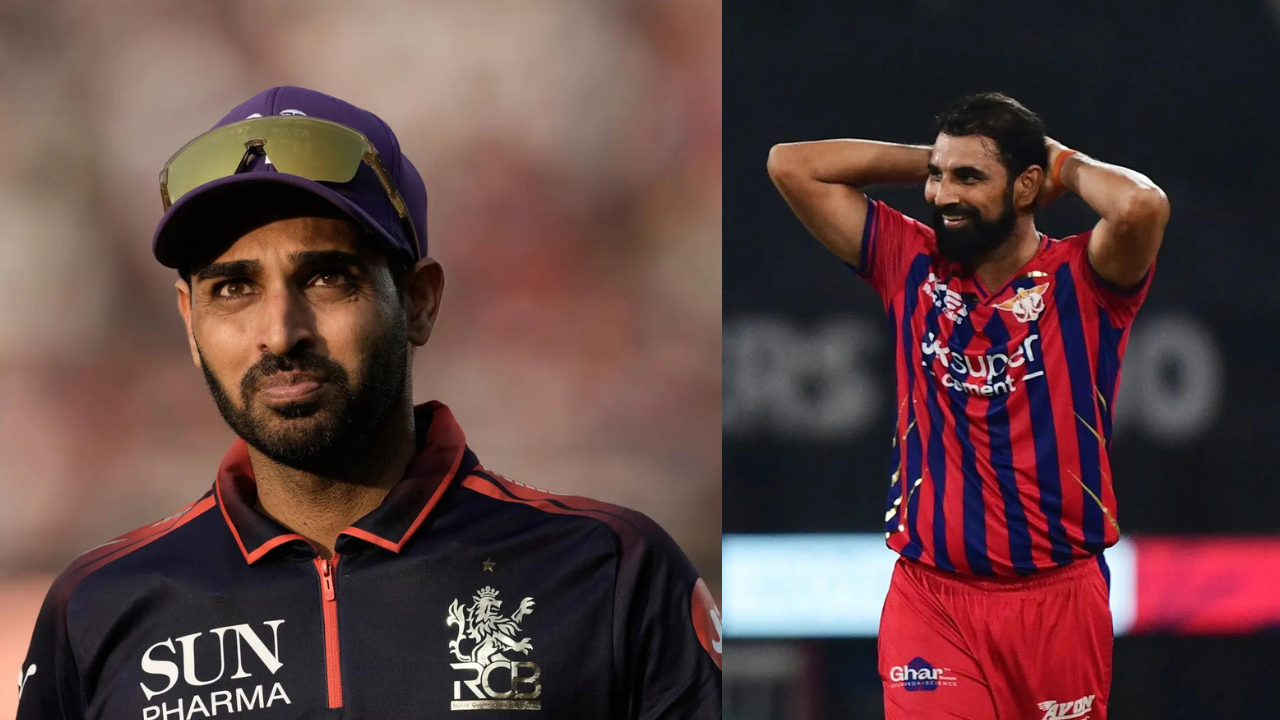
The Ranji Dilemma: Why Bhuvneshwar Kumar and Mohammed Shami Face Different Paths Back to the Indian Team
Former Indian cricketer and renowned analyst Aakash Chopra has raised a critical question about the future of two of India’s most experienced fast bowlers—Bhuvneshwar Kumar and Mohammed Shami. With the 2027 ODI World Cup looming, Chopra’s concerns highlight a growing challenge for players who skip domestic red-ball cricket: How do you stay relevant when you don’t play Ranji?
The Bhuvneshwar Kumar Conundrum
Bhuvneshwar Kumar, once India’s white-ball swing king, has seen his international appearances dwindle in recent years. Chopra points out that Bhuvi’s limited workload in 50-over cricket—beyond the IPL—could be his biggest hurdle in making a comeback.
“If you’re not playing Ranji, you’re not getting the match practice. The IPL is great, but it’s not the same as bowling long spells in ODIs. Bhuvi needs consistent 50-over cricket to prove he’s still got it.”
— Aakash Chopra
While Bhuvneshwar has been a T20 specialist in recent years, his lack of exposure in List A and domestic ODIs raises doubts about his ability to sustain performance in the longer format. The 2027 World Cup is still three years away, but selectors may already be looking for alternatives who are match-ready.
Mohammed Shami: The Exception?
In contrast, Mohammed Shami appears to be in a stronger position for selection. Despite his injury struggles, Shami has a proven track record in ODIs and has been a key part of India’s recent campaigns. His ability to bowl long spells with pace and accuracy makes him a more reliable option.
Chopra suggests that Shami’s experience and adaptability give him an edge, even if he hasn’t been a regular in domestic cricket. However, he warns that injury management will be crucial for Shami’s longevity.
The Ranji Factor: Why Domestic Cricket Still Matters
The debate around Bhuvi and Shami underscores a larger issue in Indian cricket: the declining importance of Ranji Trophy for senior players. While the IPL provides financial security and exposure, it doesn’t replicate the mental and physical demands of 50-over cricket.
For bowlers like Bhuvneshwar, who rely on swing and control, the lack of long-form match practice can be detrimental. The 2027 World Cup will be played in South Africa, where conditions favor seam and swing—exactly Bhuvi’s strengths. But if he doesn’t get enough game time, selectors may hesitate to take a risk.
What’s Next for Bhuvi and Shami?
- Bhuvneshwar Kumar: Needs to play more List A cricket (Vijay Hazare Trophy, domestic ODIs) to prove his fitness and form. A strong IPL 2025 could reignite his chances.
- Mohammed Shami: Must manage his workload and stay injury-free. If he can return to full fitness, he remains a frontline option for India.
As the 2027 World Cup cycle begins, the message is clear: Domestic cricket still holds the key to international comebacks. For Bhuvi, the clock is ticking. For Shami, the challenge is staying fit. And for Indian cricket, the question remains—How do we balance IPL success with domestic preparedness?
What do you think? Should Bhuvi and Shami prioritize Ranji Trophy to secure their spots? Let us know in the comments!