
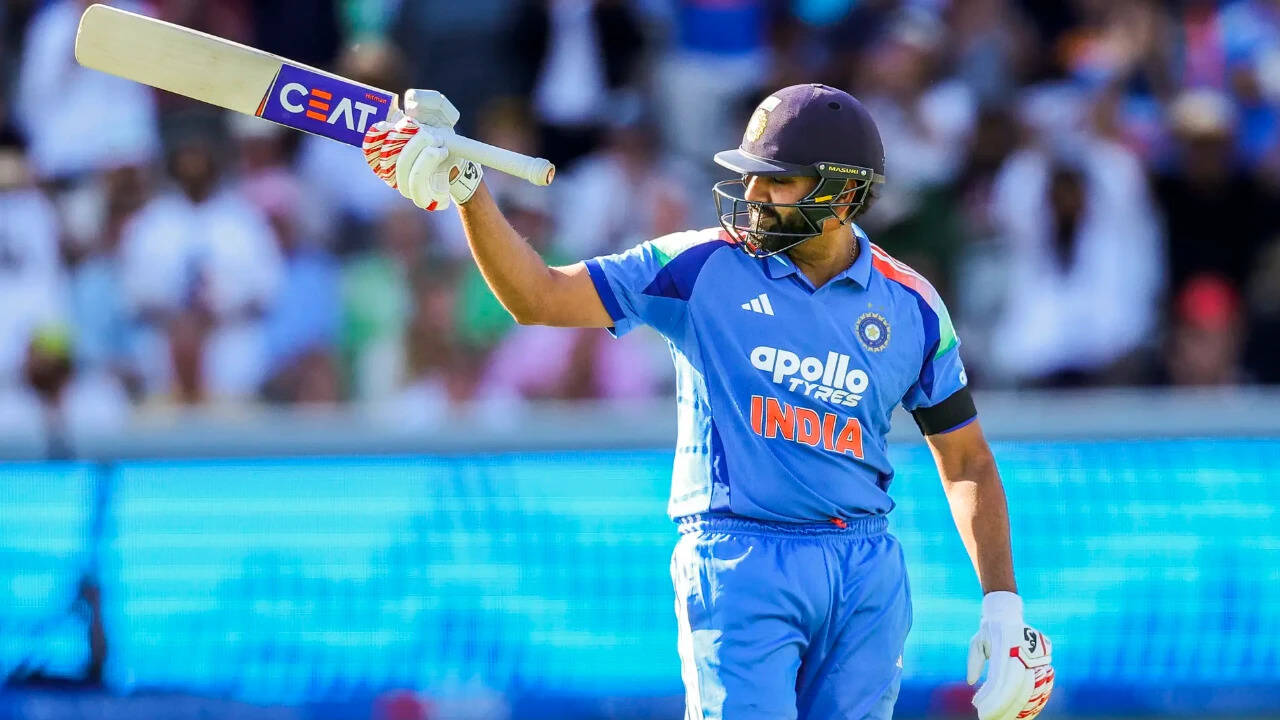
The Clock is Ticking: Rohit Sharma’s Crossroads in International Cricket
Matthew Hayden, the former Australian opener and one of cricket’s most astute analysts, recently delivered a blunt but necessary reality check to Rohit Sharma: “You can’t play forever.” The statement, though simple, carries the weight of a veteran’s wisdom—one that Rohit, now 37, must confront as he navigates the twilight of his illustrious career.
Hayden’s message wasn’t just about age; it was a call to introspection. He emphasized that Rohit is the “architect of his own destiny”, a reminder that legacy isn’t just built on past glories but on the choices made in the present. With his recent retirement from Test and T20I cricket, Rohit has already streamlined his focus to ODIs and the IPL. But the question lingers: How much longer can he sustain the physical and mental demands of top-level cricket?
The Rigors of Modern Cricket: A Test of Endurance
Modern cricket is a marathon, not a sprint. The relentless schedule—packed with bilateral series, ICC tournaments, and franchise leagues—demands peak fitness, sharp reflexes, and unwavering mental resilience. For a player like Rohit, who has been a cornerstone of India’s batting lineup for over a decade, the toll is inevitable.
Hayden’s observation isn’t just about Rohit’s age but about the inevitable decline in stamina and recovery. Even the fittest athletes reach a point where the body refuses to cooperate. The 2027 ODI World Cup in South Africa is still three years away, but for a player in his late 30s, every match is a step closer to the finish line. The question isn’t if Rohit can play until then—it’s how he manages his workload to stay at the top.
A Masterclass in Longevity: Rohit’s Recent Resurgence
Despite the looming uncertainties, Rohit’s recent performances against England have been a masterclass in timeless elegance. His ability to adapt—whether it’s his effortless strokeplay in ODIs or his tactical acumen in the IPL—proves that class is permanent. But Hayden’s warning serves as a reminder: talent alone isn’t enough to defy time.
Rohit’s leadership—both as India’s ODI captain and Mumbai Indians’ linchpin—adds another layer of responsibility. The pressure to perform, inspire, and strategize can be as exhausting as the physical demands of the game. As Hayden pointed out, Rohit must weigh his desire to continue against the reality of his body’s limits.
The 2027 World Cup: A Final Frontier?
The 2027 ODI World Cup in South Africa could very well be Rohit’s last hurrah in international cricket. At 40, he would be one of the oldest players in the tournament, and the expectations would be sky-high. The spotlight will intensify, and every failure will be scrutinized under the lens of age.
But if there’s one player who has defied expectations time and again, it’s Rohit Sharma. His ability to reinvent himself—from a flamboyant T20 specialist to a gritty Test opener and a calculating ODI captain—shows that he thrives under pressure. Yet, Hayden’s message is clear: No one is invincible.
The Legacy Question: When is the Right Time to Walk Away?
One of the hardest decisions for any athlete is knowing when to retire. Walk away too early, and you leave unfinished business. Stay too long, and you risk tarnishing your legacy. For Rohit, the challenge is to exit on his own terms—before the game forces him out.
Hayden’s advice isn’t just for Rohit; it’s a universal truth for all aging athletes. The key is to listen to your body, not just your heart. Rohit’s love for the game is undeniable, but love alone can’t sustain a career. It’s a delicate balance between passion and pragmatism.
Conclusion: The Ball is in Rohit’s Court
Matthew Hayden’s message to Rohit Sharma is a wake-up call, not a eulogy. It’s a reminder that greatness isn’t just about how long you play, but how well you play while you’re still in the game. Rohit has the experience, the skill, and the leadership to make the next few years count. But he must also have the courage to walk away when the time comes.
For now, the 2027 World Cup remains a tantalizing goal. But as Hayden put it, “You can’t play forever.” The question is: Will Rohit Sharma know when to say goodbye?
What do you think? Should Rohit Sharma prioritize the 2027 World Cup, or is it time to pass the baton? Share your thoughts in the comments!