
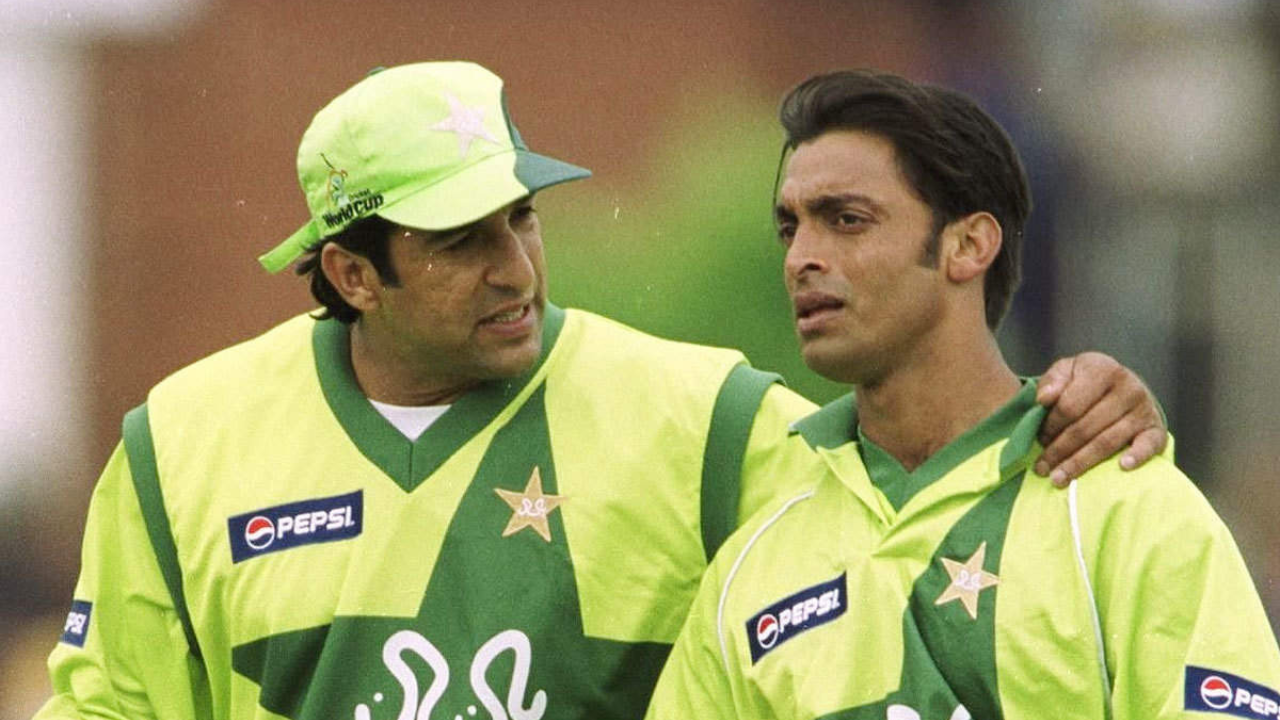
Cricket, like life, is full of 'what ifs'. Moments where a single decision, a missed opportunity, or an unspoken word could have altered the course of history. For Shoaib Akhtar, one of the fastest bowlers the world has ever seen, the biggest 'what if' revolves around a man who shaped Pakistan cricket more than anyone else—Imran Khan.
The Rawalpindi Express: A Career of Fire and Fury
Shoaib Akhtar’s career was nothing short of a whirlwind of speed, controversy, and brilliance. With 178 Test wickets in 46 matches, 247 ODI scalps in 163 games, and 21 T20I wickets, he was a nightmare for batsmen worldwide. His 161.3 km/h delivery against England in 2003 remains the fastest ball ever recorded in cricket history. Yet, despite his on-field dominance, his career was marred by injuries, suspensions, and off-field drama—much of which, he now admits, could have been avoided.
The Imran Khan Regret: A Mentor Who Wasn’t There
In recent interviews, Shoaib has opened up about a deep regret—his failure to build a stronger relationship with Imran Khan, Pakistan’s cricketing legend and former Prime Minister. Imran, who led Pakistan to their only World Cup triumph in 1992, was known for his tactical genius, leadership, and ability to extract the best from his players. Shoaib, however, admits he never fully embraced Imran’s guidance.
“I regret not learning more from Imran Khan. He was a master strategist, a leader who knew how to handle pressure. I was young, rebellious, and thought I knew it all. If I had listened to him more, my career—and maybe Pakistan cricket—could have been different.”
— Shoaib Akhtar
Imran, who had a tough-love approach, often clashed with Shoaib during his playing days. The fast bowler’s temperament, disciplinary issues, and frequent injuries frustrated the former captain, who believed Shoaib had the potential to be one of the greatest fast bowlers of all time. But instead of channeling his energy, Shoaib often found himself in controversies, including the infamous 2006 drug ban and 2011 World Cup fallout with Shahid Afridi.
The 2011 World Cup Fallout: A Career Cut Short
Shoaib’s international career ended abruptly in 2011 during the World Cup in India. Reports suggested tensions with then-captain Shahid Afridi, leading to his exclusion from the team. Many believed Shoaib still had a few years of high-quality cricket left, but his combative nature and inability to adapt cost him dearly.
Looking back, Shoaib wonders if Imran’s mentorship could have saved his career. “Imran knew how to manage egos. He could have taught me how to control my emotions, how to stay fit longer, and how to lead from the front. I was a raw talent, but I needed guidance. I didn’t get it, and that’s my biggest regret.”
What If Shoaib Had Embraced Imran’s Leadership?
Imagine a world where Shoaib Akhtar fully trusted Imran Khan’s vision. A world where he:
- Managed his fitness better, avoiding the injuries that plagued his career.
- Developed a more disciplined approach, reducing suspensions and controversies.
- Became a leader himself, mentoring the next generation of Pakistani fast bowlers.
- Extended his career by 3-4 years, adding more wickets to his already impressive tally.
Pakistan cricket could have had a legendary fast-bowling duo in the 2000s—Shoaib Akhtar and Wasim Akram—guided by Imran’s strategic mind. Instead, Shoaib’s career became a story of unfulfilled potential, a cautionary tale of what happens when talent isn’t paired with wisdom.
The Lesson for Future Generations
Shoaib’s regret is a powerful lesson for young cricketers. Talent alone isn’t enough—mentorship, discipline, and humility are just as crucial. Today, as a commentator and analyst, Shoaib often urges young players to learn from the greats, to seek guidance, and to control their emotions.
“I tell young bowlers today—find a mentor, listen to them, and don’t repeat my mistakes. Imran Khan was there, but I didn’t listen. Don’t let ego cost you your career.”
Conclusion: A Career of ‘What Ifs’
Shoaib Akhtar will always be remembered as one of the most fearsome fast bowlers in history. But his story is also a reminder that greatness isn’t just about skill—it’s about wisdom, resilience, and the ability to learn. His regret about Imran Khan isn’t just about a missed opportunity; it’s about a lifetime of lessons that could have changed Pakistan cricket forever.
As fans, we can only wonder: What if Shoaib had listened?